Latest update on Rhino Conservation in Kwa Zulu Natal, South Africa -2017
As Wild As recently took part in some of the essential conservation work undertaken in KwaZulu-Natal (KZN), South Africa. The situation has become so dire the extreme measures of the utmost urgency are needed to save the animals that still exist.
To address Rhino poaching is a complex issue that has both positive and negative aspects at this time. On a positive note, Rhino poaching deaths in South Africa are on the whole slightly in decline in 2016 and 2017, whilst still losing on average 3 Rhinos a day, deaths in the Kruger are down and arrests are increasing due to improved security, technology and legislation.
However, on the negative side this has put other regions under increased pressure, KZN being one of these where Rhino illegal deaths are up 38% and in 2017 they are currently losing a Rhino every 36 hours. A situation has potentially been exacerbated by the uplifting of an internal ban on Rhino Horn in South Africa after appeals by Rhino Farmers!
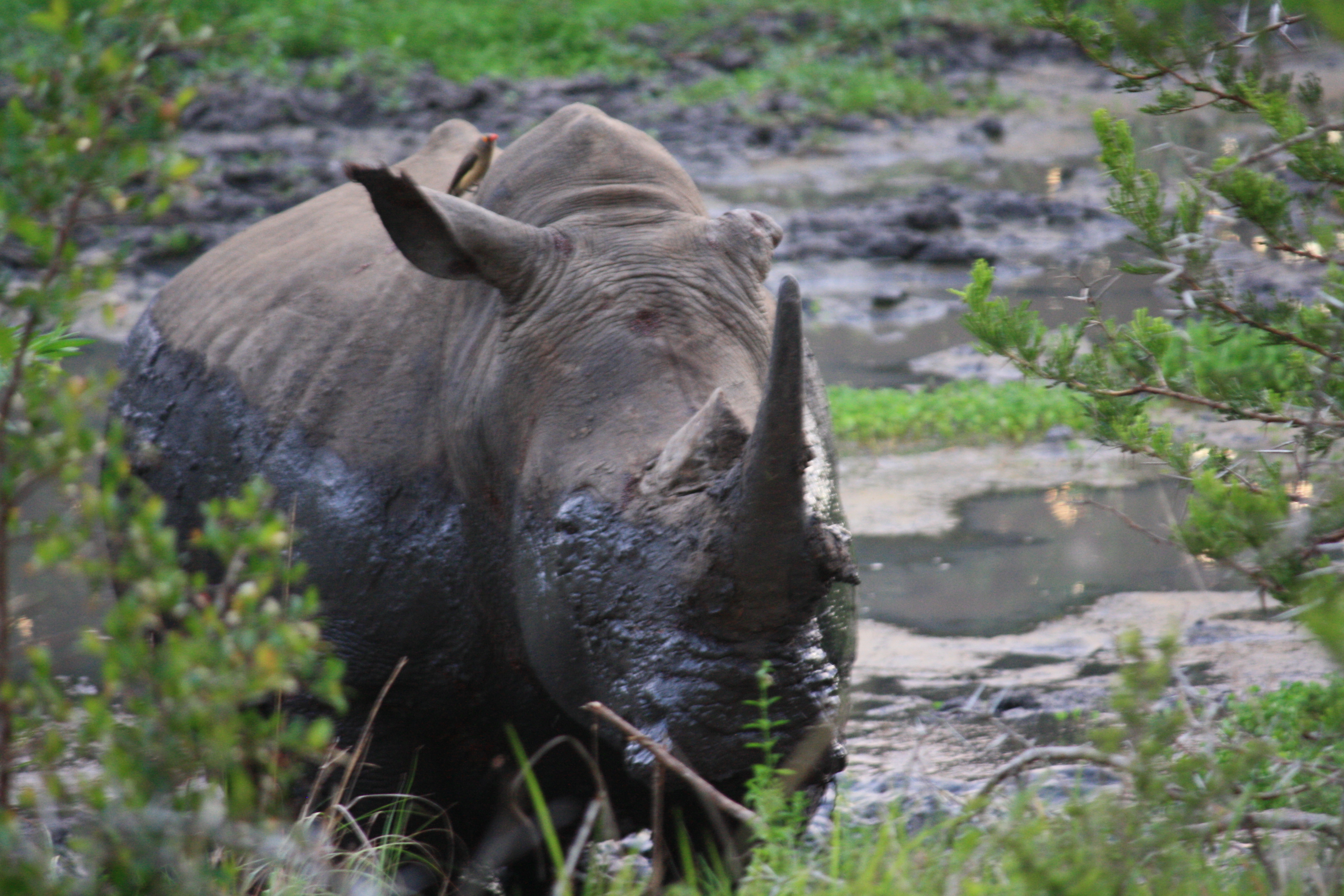
So, on Phinda Private Game Reserve in Central KZN a decision was made to minimise the opportunity for Rhino poachers. This is a multi-layered strategy that includes intensive anti-poaching patrols, intelligence gathering, relocating some of the Rhino to safer locations, and dehorning as many of the Rhino currently on the reserve. Phinda is currently home to both Black and White Rhino and protecting them has over the past 18 months become an increasingly difficult and dangerous exercise. Despite a strong, experienced Anti-Poaching unit, full time Rhino monitors and increasing help from external wildlife charities, the threat is very real, and rhinos could realistically become extinct in our life time.
Wild Tomorrow Fund, a New York US based wildlife charity www.wildtomorrowfund.org and one of our largest partners, donated the funds to enable the dehorning of over 17 Black Rhino and As Wild As was lucky enough to be included in the experience.
Waking up at 4.30 am, we clambered into our 4×4 to be driven to the centre of the reserve as the helicopter flew overhead to gather for the briefing on the day’s activity. At a briefing from the Vet the evening before of what to expect we had learnt that the operation was intended to find and dehorn as many of the animals as possible before it got too hot and then later in the day before it got too dark.
Basically, you find your rhino (all are generally micro chipped and have unique ear notches for identification), and dart as quickly as possible without stressing the animal. The dart contains M99 – an opiate that will take affect within 3 to 4 minutes once darted. There remains one small problem, the rhino will typically run like hell! Whilst the helicopter maintains surveillance, the support team in the 4×4’s follow as best as possible over rough terrain. That was our front row seats!
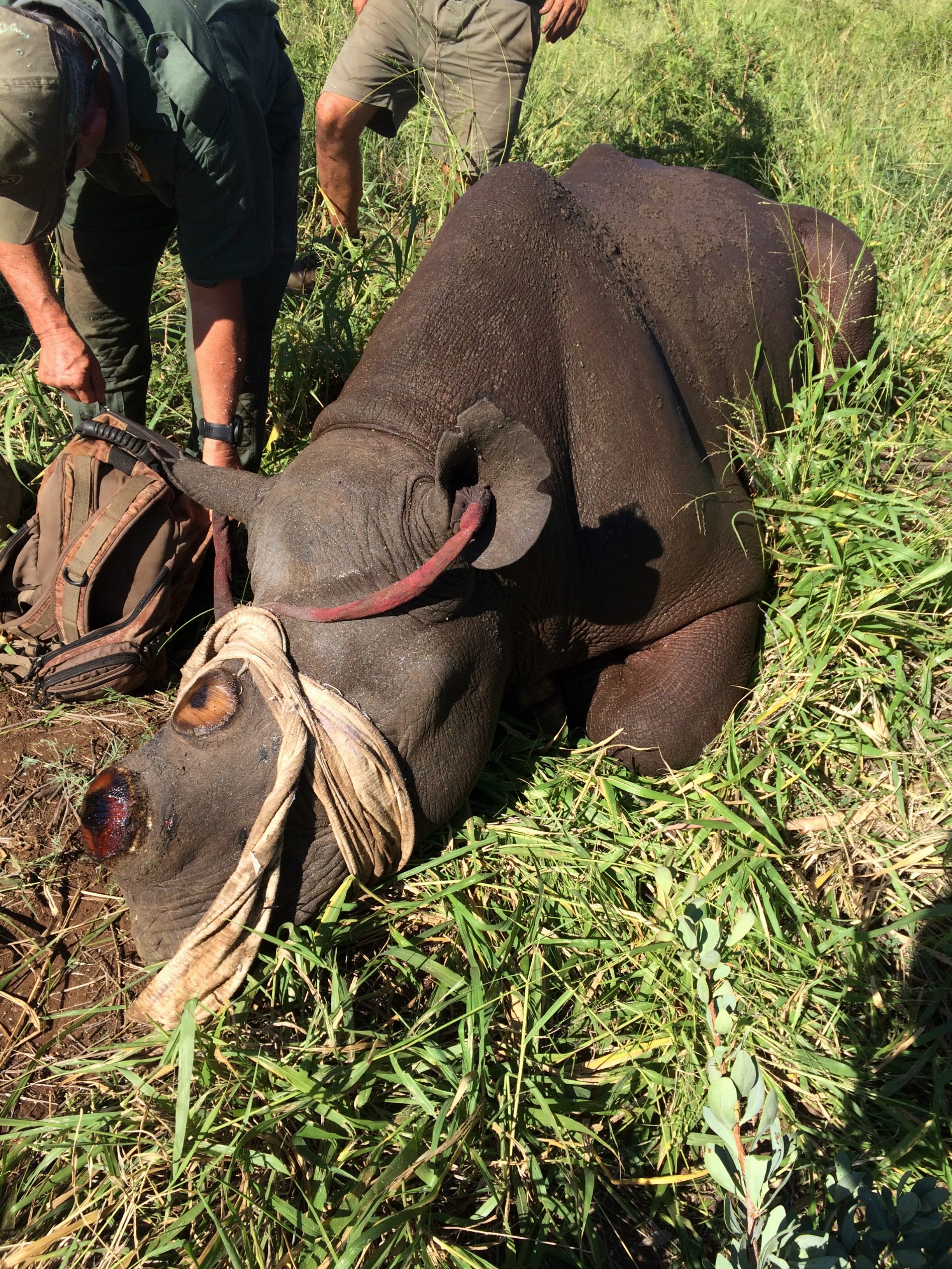
The first rhino was located shortly after 6 and in we charged once the rhino was down. The procedure is to check the identity, check the microchip, samples of hair, blood, skin and rhino horn shavings whilst ensuring throughout the animal is cooled by water and air (using leaf blowers) and breathing normally. All of these samples are used to obtain a full DNA and genetic ID for each animal so that should any wildlife trophies, illegal horns or products turn up they can be traced back to a specific region and specific animal.
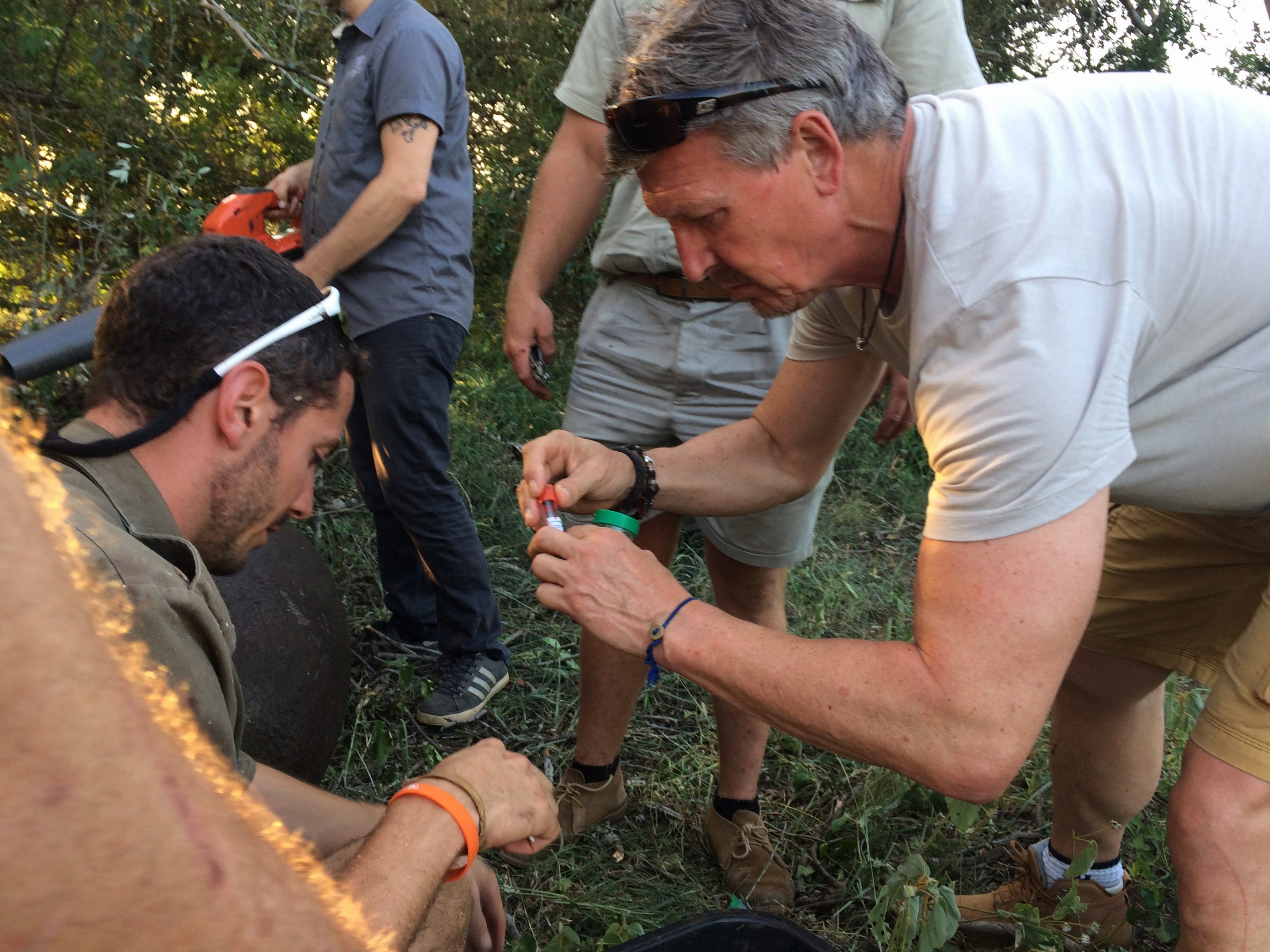 Once all these checks are done the Vet goes to work. The horns have to be removed by chainsaw, both front and back horn, all shavings are also collected (there can be over a kilo of shavings, this in street terms can be $ 60,000 upwards), the stumps are then smoothed down and a strong antiseptic is applied to both stumps. The team then gets well out of range as the Rhino is brought back to its senses. This happens in a matter of seconds and means everyone has to move very, very fast
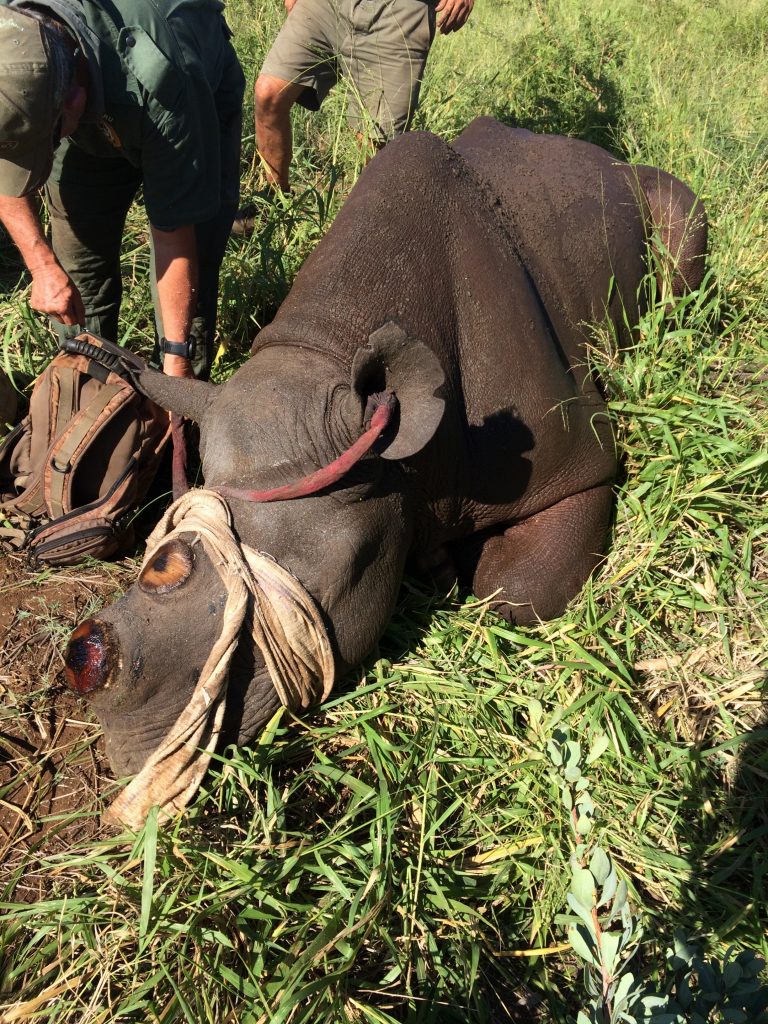 The rhino then wakes up, gets up and comes immediately back to its senses. Needless to say it is a bit perturbed by the strong smell of humans and will generally charge about a bit to warn off any possible stragglers, luckily, we never left any behind J. Then wandering off none the worse for its experience the Rhino continues to live its life, hopefully significantly safer than it was.
The whole exercise from beginning to end was less than 20 minutes!
My experience was undeniably an emotional one. I have to admit that that first Rhino dehorning had me in tears. To see such a beautiful animal, iconic for its horn, have it removed by a chainsaw and although seemingly unharmed then wander away without just made me extremely sad.
But, having spoken to many of those involved in experiencing Rhino poaching victims first hand this is what it has come to and it is currently the best way to protect them. A phrase I heard a number of times in discussions was “we are buying them time”. This alone isn’t the solution, but forms a part of the overall strategy – anything – to slow the rate of poaching.
The day stretched out as we continued to pursue and dehorn rhino. It was undeniably a very successful operation and extremely exhilarating too. Any schoolboy or girl would love to fly around in the back of a jeep whilst racing through the untamed African bush. To be able participate in what, once you realise the good that is being done, is a truly positive move to conserve the Rhino, is an unparrelled experience. The lucky few even get to fly in a helicopter!
So, in summary, an amazing experience, a very positive approach to saving Rhino in the current climate, the attitude and integrity of all involved, vet and staff, rangers, monitors, ecologists and volunteers is admirable and humbling and has certainly made me at As Wild As determined to do as much as we can now before it’s too late.
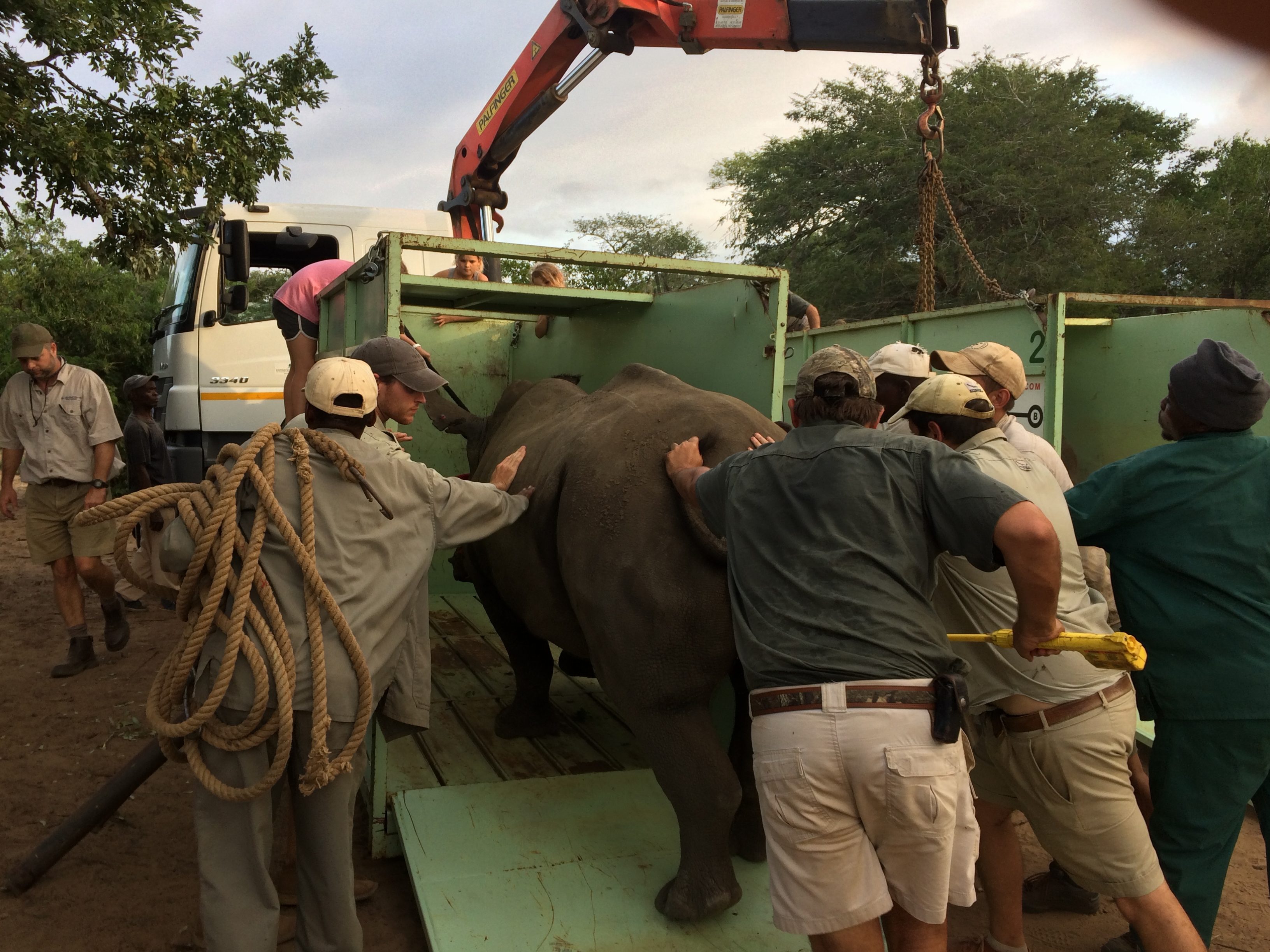 On another note, As Wild As also participated in transporting 12 horned Black and White Rhino to Botswana where they will safely be protected and be able to live a normal life whilst breeding a new generation that hopefully one day in the future will be safe in KZN as well.